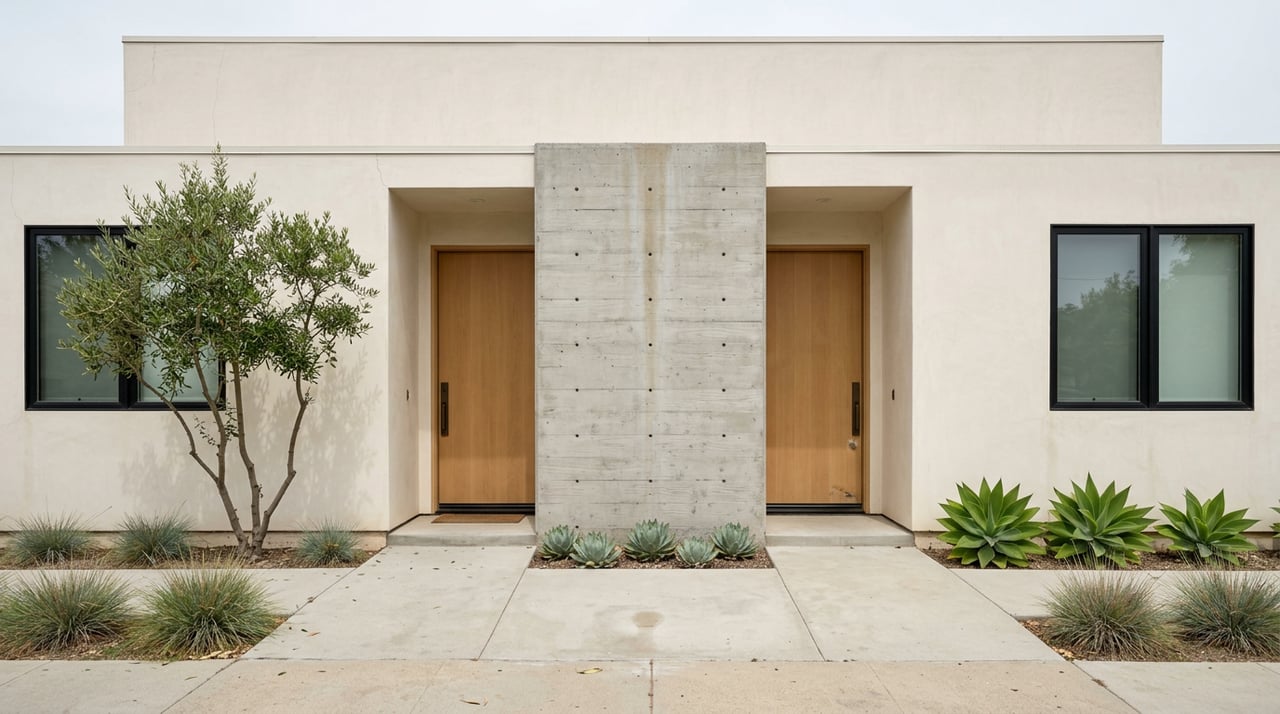
Two duplexes sit three doors apart on the same block in Ocean Park. Both have been fully redone: new kitchens, refinished floors, updated electrical. To a buyer walking through, they look identical. To the Santa Monica Rent Control Board, they are not the same asset at all. One was built in 1998. The other was built in 1968 and gut renovated in 2019. The 1998 building answers to nobody but the market. The 1968 building, despite every finish being new, still answers to a rent control charter written decades before either owner bought it.
That distinction, not square footage, not the granite, decides what the property is actually worth to run. Most buyers find this out after closing, when they try to reset a unit's rent and discover the renovation didn't do what they assumed it did.
The birth certificate outranks the remodel
Santa Monica's rent control charter covers residential rental units in buildings with two or more units that received a certificate of occupancy before April 10, 1979. Single-family homes and condominiums are exempt from that coverage under the state's Costa-Hawkins Rental Housing Act regardless of how old they are. A 1920s single-family bungalow and a brand-new condo tower both sit outside the ordinance. A 1968 duplex does not, no matter what has been done to the inside of it.
This is the part that catches multi-unit buyers off guard. They assume the exemption tracks the condition of the building. It tracks the property type and the date on the certificate of occupancy, full stop. A duplex or triplex built before that April 1979 date carries rent control with it into every future sale unless something specific happens to change its legal status.
Why the renovation didn't do what you think it did
That something specific is narrower than most sellers' agents let on. Santa Monica's charter exempts newly constructed units from rent control, but the Rent Control Board reads "newly constructed" tightly. A complete demolition followed by ground-up construction qualifies for the exemption. A renovation that keeps the foundation or the structural walls does not, even if every finish in the unit is new and the permit was labeled a full remodel.
That line, full teardown versus gut renovation, is where a lot of Westside acquisitions go sideways. A buyer sees a beautifully updated 1968 fourplex, assumes the 2019 renovation reset the clock, and underwrites the deal as if every unit can be brought to market rate on turnover without restriction. It can't, unless the county permit history shows demolition rather than remodel. Confirming which one actually happened is a five-minute records check that changes the entire pro forma.
What separates the two buildings on paper
| Single-family home or condo | Duplex/triplex built before April 10, 1979 | |
|---|---|---|
| Costa-Hawkins coverage | Exempt regardless of age | Covered unless fully demolished and rebuilt |
| Annual rent increase | Set by the market | Capped by the Rent Control Board's yearly General Adjustment |
| Rent at tenant turnover | Always market rate | Market rate only if the prior tenant left voluntarily |
| Annual registration with the Board | Not required | Required, currently $240 per unit for the 2026-2027 fiscal year |
The Rent Control Board's own maximum lawful rent page sets the current numbers: the 2026 General Adjustment is 2.6 percent, capped at a $70 monthly increase for units already at or above $2,674 in maximum allowable rent, effective September 1, 2026. That cap is the ceiling on what an existing tenancy can grow by in a year, and it applies no matter how much market rents have moved.
The real lever isn't the annual increase, it's turnover
Here is the part that changes how you should underwrite a covered building. A 2.6 percent annual cap sounds like the whole story, but it isn't. Costa-Hawkins layers a separate mechanic on top called vacancy decontrol: once a unit turns over through a tenant's own choice to leave, rather than a no-fault eviction or a buyout, the owner can reset that unit to market rate. The new rent then becomes the controlled baseline going forward, subject to the same small annual adjustments until the next voluntary vacancy.
That means the entire economic upside of a covered Santa Monica duplex sits behind one variable: how long the current tenants stay. Two identical buildings with identical rent rolls today can have completely different five-year returns depending on tenant tenure. A building with tenants who have been in place since 2005 is not the same investment as one where every unit turned over in the last three years, even if this month's rent roll looks the same on both. This is the number a rent roll never shows you, and it belongs in the offer strategy before it belongs in a spreadsheet.
The liability that doesn't disappear at closing
If a prior owner ever withdrew the building from the rental market under the Ellis Act, that history follows the parcel, not the person who filed it. Displaced tenants retain re-rental rights for ten years after an Ellis Act withdrawal. If a landlord re-rents within two years, the displaced tenant has first right of refusal at the old controlled rent. Within five years, the prior maximum allowable rent still controls. Within the full ten-year window, the tenant keeps a right of first refusal even at market rate. These obligations attach to the property itself and pass to whoever buys it next, according to the state Government Code provisions covered in a recent Westside landlord guide.
In practice, this means a building that looks fully vacant and market-ready could still carry a decade-long obligation to a tenant nobody currently living there has ever met. Asking whether a property has ever gone through an Ellis Act withdrawal, and when, belongs on the same due diligence list as a title report.
What this means before you write an offer
A few checks turn this from a risk into a known quantity:
- Pull the certificate of occupancy date from county records. Before April 10, 1979, and two or more units, assumes coverage unless proven otherwise.
- If the listing mentions a renovation, ask for the permit type. Demolition and rebuild changes everything. A remodel permit changes nothing about coverage.
- Check the city's Maximum Allowable Rent database for each unit before finalizing an offer. It updates nightly, though the city notes the figures are based on owner-reported data that has not been independently verified, so treat it as a strong starting point rather than a final number.
- Ask directly whether the property has ever been through an Ellis Act withdrawal and get the date in writing.
- Model the rent roll against tenant tenure, not just current rent, since tenure is what determines when vacancy decontrol actually applies.
None of this shows up on a standard listing sheet. It shows up in county permit records, the city's own registration files, and a direct question to the seller that a lot of buyers never think to ask.
FAQ
Does a renovated Santa Monica duplex ever become exempt from rent control? Only if the building went through a complete demolition and was rebuilt as new construction under the charter's newly constructed exemption. A remodel that keeps the foundation or structural walls in place does not qualify, regardless of scope.
What happens if I buy a covered property and want to move into a unit myself? Owner move-in falls under the city's no-fault eviction rules, which require relocation payments under the municipal code. The current schedule includes a base amount plus additional sums for protected tenants such as those over 62, disabled, or with minor children, and total relocation costs can exceed $25,000 per displaced household in those cases. Confirm the current figures with the Rent Control Board before serving any notice.
How do I check a unit's legal rent before making an offer? The city's Maximum Allowable Rent database is updated nightly and searchable by address. It's a convenience tool built from owner-reported data rather than a legally binding record, so pair it with a direct request to the seller for registration history and any Board decisions on file.
Rent control status is one of the quieter variables in a Westside purchase, and it rarely shows up until someone goes looking for it. If you're weighing a multi-unit property in Santa Monica, or trying to figure out what a covered building is actually worth to hold versus a comparable single-family home nearby, Kyle Leibovitch can walk through the specific permit history and rent roll with you before you write an offer. Schedule a consultation to talk through the numbers on a specific address.